


Exclusive
Cairns Named in Top 10 Trending Destinations for 2024
Joseph Dominic Romero
Introduction to the Columbia Submarine Program
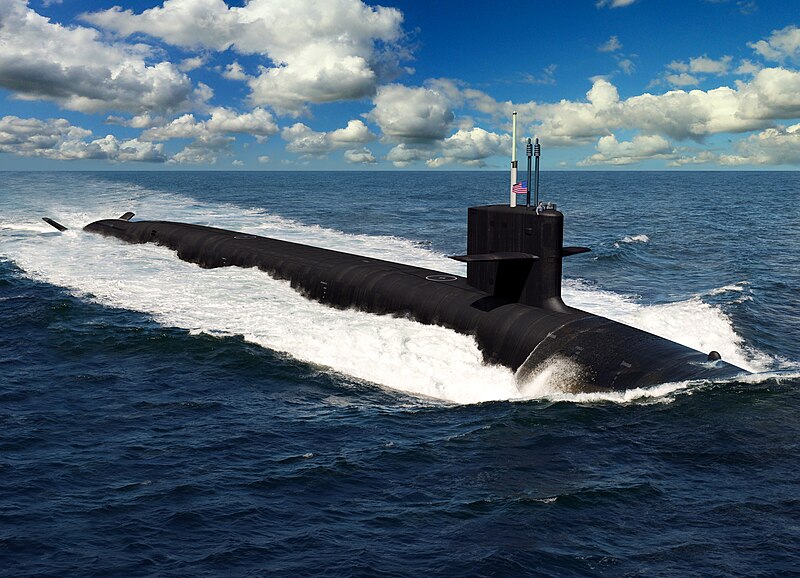
The Congressional Research Service reveals key insights into the Columbia submarine program, an ambitious US Navy initiative. This program involves replacing the current Ohio class Ballistic Missile submarines with 12 advanced Columbia class submarines, estimated to cost around US$112 billion (AUD$164 billion). Each Columbia class submarine will be equipped with 16 Trident II D5 missiles, capable of carrying thermonuclear warheads to multiple targets, ensuring a formidable nuclear deterrent.
Strategic Importance and Stealth Capabilities
These submarines are a crucial element of the US nuclear triad, comprising land-based missiles, air-launched weapons, and submarine-launched ballistic missiles. The stealth and near-undetectability of these submarines on patrol make them a vital and survivable component of the triad. Their ability to deliver thermonuclear weapons to 128 different targets underscores their strategic significance.
Advanced Stealth Technology: The Columbia class submarines stand out for their cutting-edge stealth capabilities. They employ advanced sound-masking techniques, making them nearly undetectable. This stealth is crucial for evading enemy detection.
Enhanced Propulsion: These submarines feature a life-of-the-boat nuclear reactor. It means they don’t require refueling during their operational lifetime. Consequently, they can remain at sea longer, enhancing their strategic utility.
Upgraded Communication Systems: The Columbia class boasts state-of-the-art communication systems. These allow for seamless and secure information exchange, vital for modern naval operations.
Increased Missile Capacity: Each submarine carries 16 Trident II D5 missiles. These missiles are known for their precision and long range. Thus, the Columbia class significantly bolsters the US Navy’s offensive capabilities.
Energy Efficiency: Despite their size, these submarines are designed to be energy-efficient. This efficiency reduces operational costs and aligns with environmental considerations.
Modular Construction: The use of modular construction techniques speeds up the building process. It also allows for easier maintenance and upgrades, ensuring the submarines remain at the cutting edge throughout their service life.
AUKUS and the Columbia Program Overlook
The recent focus on the AUKUS agreement, facilitating Australia’s access to nuclear submarines, has overshadowed the significance of the Columbia program. These ballistic missile submarines are to be constructed at the same shipyards as the Virginia class attack submarines, which are also part of the AUKUS deal. This simultaneous production, starting with the first Columbia submarine in October 2027, poses significant logistical challenges.
Industrial and Financial Implications of AUKUS
To accommodate the increased production rate required by AUKUS, the US Government has requested additional funding for 2024. Simultaneously, Australia has pledged US$3 billion (AUD$4.7 billion) to enhance the US submarine industrial base’s capacity. This contribution supports the construction of both Virginia and Columbia class submarines, highlighting Australia’s integral role in this massive defense endeavor.
Parliamentary Oversight and Ethical Considerations
The Congressional Research Service report raises questions about the transparency of Australia’s involvement, particularly in funding aspects of the US nuclear strike force. This situation potentially conflicts with Australia’s commitments to the Treaty on the Non-Proliferation of nuclear weapons. The Labor party faces internal dissent over this development, given its historical stance on nuclear disarmament and non-proliferation.
AUKUS and Australia’s Changing Defense Posture
The AUKUS agreement marks a significant shift in Australia’s defense policy and its approach to nuclear disarmament. This involvement in the US nuclear program, as highlighted by the Congressional Research Service, reflects a new strategic direction, raising questions about the long-term implications for Australia’s defense policy and international commitments.
Image Source: Wikimedia Commons
Editor's Picks


Just in
January 7, 2024
Cairns Named in Top 10 Trending Destinations for 2024January 7, 2024
Australia’s Digital Evolution in 2023